




On-Demand Staffing for Brand Activations
On-demand staffing gives brands and agencies a technology-enabled way to source, train, schedule, deploy, and manage temporary talent across North America. Rather than treating recruitment, training, communication, attendance, payroll, and reporting as separate tasks, the model connects them through one centralized workforce-management process.
Access to available talent alone does not ensure a successful activation. Each program also requires qualified and profiled applicants, human-led selection, completed training, validated attendance, responsive field support, accurate payroll, and clear program reconciliation. Without that structure, staffing gaps and inconsistent execution may remain hidden until the activation is already underway.
This guide explains how talent profiling, casting calls, digital training, scheduling, attendance validation, compliance tracking, payroll administration, and field reporting work together within an on-demand staffing model. It also outlines how brands and agencies can evaluate staffing partners for experiential marketing, retail, conference, sporting-event, and multi-city programs.
The key shift: On-demand staffing is not simply about filling temporary roles quickly. It is about combining technology, structured workforce management, and human oversight to deliver consistent brand representation across locations.
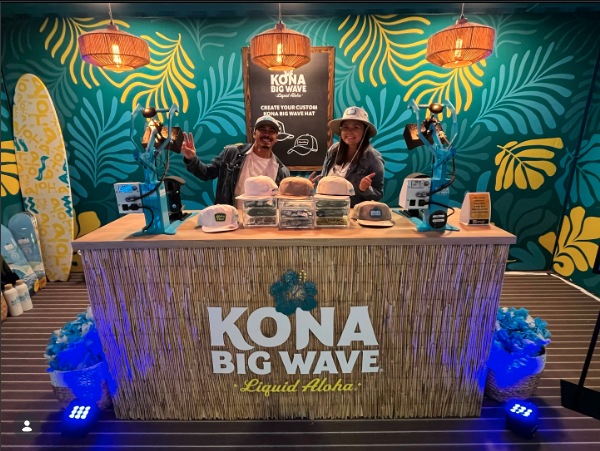
Brand activations rarely happen in one place, with one type of talent, or without last-minute changes. A national product launch may require trained teams in several cities on the same day. A major conference may need hundreds of registration, wayfinding, and guest-support staff. A retail program may run throughout the year across multiple locations.
Coordinating these programs through separate vendors, spreadsheets, email threads, and manual timesheets makes it difficult to maintain consistent standards. It can also leave brands with limited visibility into training, attendance, performance, payroll, and workforce classification.
On-demand staffing addresses this operational challenge by bringing talent sourcing, applications, scheduling, training, communication, attendance validation, payroll administration, and reporting into a more centralized process. For brands and agencies operating across the United States and Canada, it provides a structured way to manage temporary field teams across multiple markets.
What Does On-Demand Staffing Mean for Brand Activations?
On-demand staffing allows brands and agencies to access temporary talent for defined marketing, retail, sales, and event programs without rebuilding the entire staffing process for every activation.
Unlike entertainment casting, which typically focuses on actors, models, or background performers for a production, brand activation staffing fills operational roles such as:
- Brand ambassadors
- Product demonstrators
- Sampling teams
- Conference registration staff
- Guest-services personnel
- Wayfinding staff
- Promotional models
- Merchandising support teams
- Team leads and field supervisors
The word “casting” still matters in this context. Brands need people whose experience, availability, location, and presentation fit the assignment. However, selecting talent is only one part of the process. A large activation also requires scheduling, training, communication, attendance verification, payroll administration, performance tracking, and program reconciliation.
That broader workforce-management requirement is where a technology-enabled platform differs from a process built around disconnected tools.
How a Technology-Enabled Staffing Platform Works
A modern staffing platform supports the complete field-talent lifecycle rather than treating every assignment as a standalone hiring exercise.
1. Talent Profiling
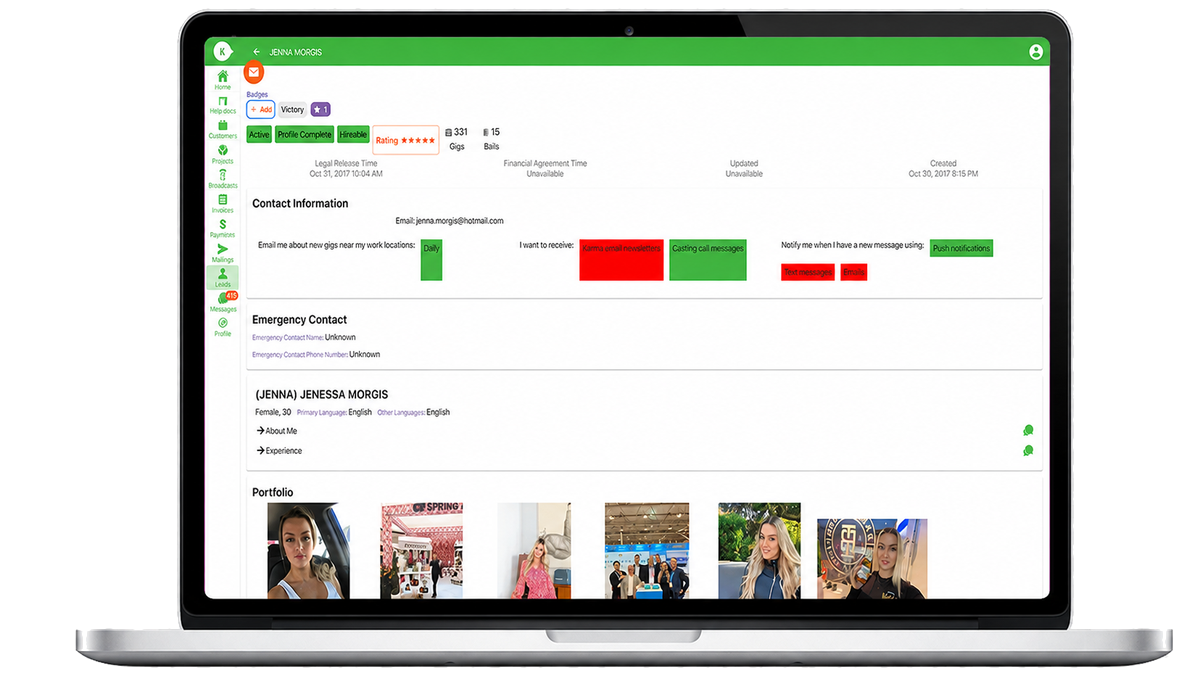
Talent members create profiles containing relevant information about their experience, skills, location, availability, and work preferences. This gives recruiting teams more information than a name and phone number when identifying potential candidates.
Karma Casting has access to a network of more than 120,000 talent members across North America. This includes talent connected through Karma’s platform and broader network. The platform maintains detailed profiles for registered users, allowing the team to manage opportunities and applications through a centralized system.
2. Casting Calls and Applications
When a program becomes available, suitable opportunities are presented to talent based on factors such as geography and availability. Each casting call can explain the brand, role, schedule, pay rate, training requirements, dress expectations, and other assignment details.
Talent members decide which opportunities they want to pursue and submit applications through the platform. This prevents the process from being mistaken for fully automated deployment.
3. Human Review and Authorization
Technology organizes applicant information and reduces manual administration. It does not make the final casting decision on its own.
Karma Casting’s recruiting team reviews applicants and selects the people authorized to represent each client. This human review helps protect brand fit while preserving the speed of a technology-supported application process.
4. Digital Training and Completion Validation
Selected talent can receive program information and training digitally before arriving in the field. Completion validation allows program managers to confirm who completed required materials rather than relying on assumptions or scattered email confirmations.
This is especially important for product demonstrations, sampling programs, and customer-facing assignments where teams must understand brand messages, product details, safety requirements, or reporting procedures.
5. Scheduling and Communication
Shift information, updates, reminders, and last-minute changes can be managed through one system. This reduces dependence on separate spreadsheets, text-message chains, and regional contact lists.
Centralized communication becomes more valuable as a program expands. A single schedule change may affect talent in several locations, supervisors in the field, and stakeholders at the brand or agency.
6. Attendance and Time Validation
Geo-mapped check-in and check-out can help confirm that scheduled talent reached the correct location at the expected time. Where appropriate and permitted, additional identity-validation tools may support attendance verification.
These capabilities give program managers earlier visibility into missed or delayed check-ins. The operations team can then investigate the issue, arrange backup coverage, or notify the client before an entire shift is affected.
7. Payroll and Government Remittance
Time validation, payroll administration, and applicable government remittances form part of the same workforce-management process. Connecting these activities reduces the need to reconcile unrelated scheduling, attendance, and payment records after a program.
8. Reporting and Project Reconciliation
Once a program ends, brands and agencies need a reliable record of what happened. Project reconciliation can include scheduled and completed hours, attendance, training completion, exceptions, and other agreed program details.
This information supports accurate closeout and helps program teams identify improvements for future activations.
On-Demand Staffing Supported by Proven Field Experience
Karma Casting has combined technology-driven workforce management with human recruiting and field oversight since 2016. Its experience includes programs across experiential marketing, retail, conferences, sporting events, product launches, and other customer-facing environments throughout the United States and Canada.
Karma Casting’s North American operating experience includes:
- Access to more than 120,000 talent members
- More than 10,000 programs delivered
- Over 1.5 million field hours executed
- Technology-enabled talent sourcing, scheduling, training, and reporting
- Performance-based talent evaluation
- Real-time visibility into program activity
- Cross-border workforce-management capabilities
Where On-Demand Staffing Supports the Brand Calendar
On-demand staffing is useful anywhere a company needs trained, customer-facing talent for a defined period. The model can support several parts of a brand’s annual marketing and retail calendar.
Retail Activations and Product Demonstrations
Retail activations and product demonstrations may require product demonstrators, sampling teams, merchandising personnel, and team leads across multiple stores. A centralized platform helps brands coordinate schedules and training while maintaining visibility across locations.
Retail activity also runs throughout the year. Brands therefore benefit from being able to identify and rebook people with relevant product or retailer experience.
Conferences and Trade Shows
Large conferences and trade shows require more than booth staff. Programs may need registration teams, badge-distribution staff, wayfinders, room monitors, VIP-area support, and guest-services personnel working simultaneously.
For conferences involving hundreds of temporary staff, clear support ratios, role assignments, check-in procedures, and escalation paths are essential. The staffing platform supports coordination, while experienced managers oversee deployment and field execution.
Experiential Marketing Campaigns
Experiential programs bring brands into direct contact with consumers. Talent may distribute samples, demonstrate products, collect approved information, explain offers, or guide people through an interactive experience.
Because the talent becomes the public face of the campaign, recruiting and training decisions directly affect brand consistency.
Sporting-Event Activations
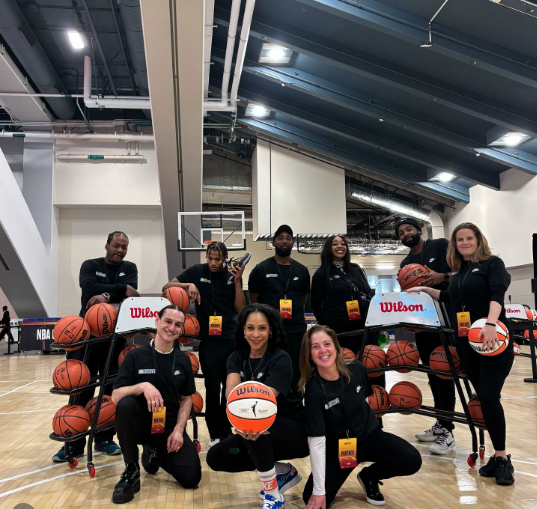
Sporting events create high-traffic environments with strict schedules and considerable public visibility. Activation teams may support sampling, guest engagement, sponsor experiences, registration, or branded areas inside and outside the venue.
These programs require talent who can follow detailed instructions while remaining responsive in a busy environment.
Product Launches and Multi-City Tours
A coordinated launch may need teams in several cities on the same day. Tours introduce another layer of complexity because schedules, venues, staffing levels, and local requirements can change from one market to the next.
One North American staffing process gives brands and agencies a consistent way to manage applications, training, attendance, and reporting throughout the program.
Pop-Ups and Short-Notice Programs
Pop-ups and temporary promotional experiences often operate within narrow planning windows. Access to pre-profiled talent can shorten the sourcing process, while centralized communication helps teams respond to changes without losing oversight.
Why Workforce Classification Requires Careful Management
Worker classification is not simply a payroll label. It depends on the actual relationship between the worker, staffing provider, client, and assignment.
A Cross-Border Operating Structure
Karma Casting operates through legal entities in both Canada and the United States. This structure supports country-specific workforce processes rather than applying one classification model across every North American program.
In the United States, Karma supports W-2 employment models where required by the assignment and applicable rules. In Canada, independent contractor arrangements may be used where the working relationship and applicable requirements support that classification.
This distinction matters because US and Canadian terminology, payroll requirements, remittance processes, and employment-status tests are not interchangeable. Each program must be assessed according to where the work takes place and how the working relationship is structured.
Why the Engagement Model Matters to Brands
Some temporary staffing arrangements may appear less expensive when workers are treated as independent contractors. However, cost alone does not determine whether that classification is appropriate. The actual working relationship, including control, scheduling, training, supervision, and the nature of the assignment, must support the selected model.
For US programs, an appropriate W-2 employment structure can help reduce exposure associated with worker misclassification. It can also provide a clearer allocation of payroll, employment, insurance, and workforce-management responsibilities between the staffing partner and the brand.
Brands should ask potential staffing partners:
- Who employs or contracts with the deployed talent?
- Who handles payroll, withholding, and required remittances?
- How is the classification decision documented?
- Which insurance policies apply to the program?
- How are responsibilities divided between the staffing provider and client?
- How are state and federal requirements evaluated?
- What happens if a worker, regulator, or third party challenges the arrangement?
No staffing model eliminates every possible claim. A documented employment and compliance process gives brands a stronger foundation than choosing a classification primarily because it reduces the immediate staffing cost.
The Business Case for Centralized On-Demand Staffing
For organizations managing repeated or multi-market activations, the value of on-demand staffing extends beyond finding available people.
Better Program Visibility
A centralized system gives program teams a clearer view of applications, training, schedules, check-ins, and exceptions. This is more useful than waiting until after an activation to learn that a role was left uncovered or that required training was incomplete.
Less Administrative Fragmentation
Managing different regional vendors may mean reconciling separate contracts, schedules, reporting methods, invoices, and timesheets. Standardizing the workflow can reduce duplicate administration and make program closeout more consistent.
Faster Response to Field Issues
Live attendance and field information help operations teams identify problems sooner. Earlier visibility creates more time to contact talent, activate backup coverage, or adjust the deployment plan.
More Consistent Training and Execution
Centralized training materials and completion records help brands establish the same expectations across markets. Human field management then reinforces those standards during execution.
Stronger Talent Continuity
Performance records allow staffing teams to identify people who completed previous assignments successfully. When availability permits, proven talent can be considered for future programs instead of restarting the evaluation process each time.
Reliable payroll also affects continuity. Talent members are more likely to consider future assignments when payment processes are clear, timely, and supported by accurate time records.
Cleaner Program Reconciliation
A consistent closeout process gives brands and agencies a clearer accounting of completed hours, attendance, training, and exceptions. It also creates a documented foundation for improving the next program.
What Should Brands Look for in an On-Demand Staffing Partner?
Not every staffing platform provides the same level of operational support. Brands and agencies should evaluate the process behind the technology before selecting a North American partner.
North American Operating Coverage
Confirm where the company actively operates and whether it understands the differences between US and Canadian workforce requirements. Cross-border coverage should involve distinct processes, not the automatic application of one country’s model to another.
Talent-Network Transparency
Large network figures need context. Ask how many people have registered platform profiles, how many are available through connected networks, how recently profiles were active, and how talent is screened for an assignment.
Human Casting and Program Support
Ask who reviews applications, authorizes talent, manages escalations, and supports the field team. A platform should make experienced people more effective rather than remove human accountability.
Training and Quality Assurance
Review how training is distributed, how completion is validated, and how field performance is documented. Brands should also understand how feedback influences future casting decisions.
Attendance and Reporting Capabilities
Ask how check-in, check-out, time validation, exceptions, and final reconciliation are handled. The reporting process should be clear before the activation starts.
Workforce-Classification Process
The partner should provide a clear explanation of its engagement models, payroll responsibilities, remittance processes, recordkeeping, and escalation procedures. Vague compliance assurances are not a substitute for documented processes.
Insurance Protection
Confirm which policies apply to the staffing provider, deployed talent, and specific program. Insurance needs can vary by role, venue, client, and jurisdiction.
Agency-Friendly Service Structure
Marketing and experiential agencies should understand whether the staffing partner will support execution without competing for strategy, creative ownership, or the end-client relationship.
Karma Casting works with agencies as an execution and workforce-management partner. The agency retains control of strategy and the client relationship, while Karma supports talent sourcing, scheduling, training, deployment, payroll, and field reporting.
How AI Can Support Staffing Without Replacing Human Judgment
AI-assisted tools can help staffing teams organize large volumes of profile, location, availability, and performance information. They may also help surface potentially suitable candidates or identify scheduling patterns faster than a fully manual review.
The appropriate role for AI is decision support. It should not remove human responsibility for assessing applicants, understanding the client brief, selecting brand representatives, or responding to conditions in the field.
Karma Casting’s model keeps people at the point of authorization. Talent members choose which opportunities they want to apply for, and Karma’s team decides who is approved to represent the client. Technology improves the workflow, while human judgment protects decision quality.
Why One North American Partner Can Improve Program Continuity
Brands sometimes manage multi-market activations through a separate staffing relationship in every city. That approach may meet an immediate local need, but it can produce different training processes, communication methods, reporting formats, and escalation procedures within the same campaign.
A single North American partner provides a common operating framework while still accounting for local program requirements. The potential advantages include:
- One central point of coordination
- Consistent talent and training expectations
- Standardized attendance and reporting processes
- Clearer escalation paths
- Consolidated program reconciliation
- Greater ability to retain performance history across campaigns
- Separate consideration of US and Canadian workforce requirements
Consolidation does not mean removing local knowledge. It means managing local execution through a shared structure that gives the brand or agency greater visibility across the complete program.

Build a More Consistent Staffing Process Across North America
Successful brand activation staffing involves more than filling shifts. It requires qualified, profiled talent; structured training; clear communication; validated attendance; responsive field support; accurate payroll; appropriate workforce processes; and reliable program reconciliation.
Since 2016, Karma Casting has delivered more than 10,000 programs and supported over 1.5 million field hours across North America. Its proprietary platform provides access to more than 120,000 talent members while supporting applications, human-led selection, digital training, scheduling, attendance validation, payroll, performance evaluation, and program reporting across the United States and Canada.
Planning an upcoming activation? Talk to Karma Casting about sourcing, training, deploying, and managing talent through one North American platform.